Sunday, March 27, 2011

Hudson River Estuary Program

                                                     Hudson River Estuary Program Logo
I decided to observe on something in nature that was besides the ordinary 'talking about the springtime' blog.
Earlier in the week, I attended a very interesting seminar presentation in my Biology class that was put on by workers from this particular program called the Hudson River Estuary Program. What this program does is it improves the Hudson River water area for all of the residents to ensure clean water and a clean area for the animals who live in the water. This organization is always looking for volunteers in the many different areas where they do experiments on. These areas include researching Eels, River Herring, and even different kinds of trees                
                                

I didn't even really know what herring were until I went to this presentation. Herring are a specific kind of fish that travel in schools and one of the projects that they research are the amount of Herring in the waters along the East Coast. River Herring along the East coast are declining due to many factors like invasive species, issues with the water quality, and an increase in predator population. One Herring monitor activity that they talked about was for volunteers (they can be anyone: children, college students, or adults) to go out to certain spots along the Hudson and they count the number of Herring that they spot there for a time period of fifteen minutes throughout different times of the day. This usually occurs over a two month period from the beginning of May to the end of June and it's importance is that the Program can get a good idea of how the Herring population is continuously changing over the years and and how it is affecting the life of their species.

As I was listening to this seminar, I started thinking of ways that I can do fun things like this with my students in the classroom. I think it is so important for students to get outside of the classroom and get a hands on experience in so many different fields of science that allows them to use their creativity and experience the scientific world in so many different ways. It is so important that students explore things outside the classroom and explore nature in the scientific sense. Students love this kind of stuff where they get the chance to go outside the classroom and play around and explore things in nature. When I have a classroom I would love for my students to get outside and observe what's around them. I think one of the most important things in my classroom is to do different hands on activities where students can interact with the environment and learn so many different concepts and methods that they can apply in other situations throughout their life. I can't wait until I have my own classroom and I can use these kinds of activities for my students to have a positive learning experience from! :)

Moving Beyond the Science Kit


    Student's learning about the history of science today is so relevant because they can apply what is taught in the classroom to how science was created in the past. Learning about the basic history of science, just even about some famous scientists who taught about some basic models and introduced some science vocabulary is important today because that is the vocabulary that teachers have to teach in the classroom. In Mrs. Murray's class, they presented a timeline of the 'atomic theory'. The atomic theory relates a lot to what they are learning about in class, the atom. She asked each group to present their scientist until they realize that each scientist plays an important role in history, and they each build on one another to create a specific idea during that particular time period. 
     This isn't just seen in something like the atomic theory but this chapter teaches how important it is for students to learn the history of science. By doing this, students can see how scientific ideas each relate to one another, and how science has changed over the years due to the many discoveries and experiments that have been created. Even though some ideas may just be very small discoveries, they still lead to the discovery of bigger and more important things. Learning the history of science is so important for students to understand so they can further understand the scientific ideas of many generations in the past. 
     I think working with mystery boxes is such a creative idea to do in the classroom. I don't specifically remember any certain activity in the classroom where we used 'mystery boxes' to determine what was in the box, but I think it is such a creative way to allow students to use their creativity and apply using their senses in fun and creative ways. This also allows them to help build their confidence in being sure of their answer, no matter if it is right or wrong. It is also a fun activity for kids to do that doesn't allow them to just write things down with a pen and paper, and it allows for them to do scientific activities in fun and other exciting ways. 
    I think it is so important for students to use other various objects that they can find everyday around the house to build scientific models in the classroom. Mrs. Murray posed a design challenge for her students and she explained how she will bring certain materials such as clay, rubber bands,and Popsicle sticks, then allows for the students to bring any kinds of materials they want from home. After they brainstorm and do research, they can use their materials to create possible models for their design. I think this is a great idea to do in the classroom and I will definitely incorporate this kind of activity in my own classroom. This activity can even be used as an idea for science circus, and one idea can be that students use all of their objects that they are given to build a model out of. It is so important that students use their minds in creative ways by exploring what they can do when they have to apply their knowledge by using their other senses besides writing things down with a pen and paper. I can't wait to have my own science circus in the classroom! :)


Here's a great video about the atomic theory I found that is great to use in the classroom!


Reflection on Fieldwork

Walking into Mrs. Benfer's 5th grade science class gave me so many emotions running through my head. I was nervous because I wanted to make a perfect impression to the students in the classroom and I wanted them to have a great experience with our class.
Right when we walked into the classroom was so exciting. To see the look on these students faces of joy, excitement, and they were just so excited about the fact that they got to work with a college student! I love the look on the kid's faces of them knowing that they have so much to learn and the fact that I can help form their new minds into some great knowledge that they will use in the years ahead of them. After the lesson of mixtures and solutions were taught to the class, we were all asked to divide up with the students into two separate classrooms. I had so many thoughts going through my head..like 'what if I don't know an answer to one of their questions?' or ' What if my student that i'm paired with doesn't like me?' I think that that was actually my first concern as a teacher. That's when it actually hit me that it is so important for the students to be learning in a positive environment and how I help them to learn is so important. As the period went on I just introduced myself to my student and then helped him complete the activity he was working on. Overall, our first day of fieldwork was a positive experience and I can't wait to teach my lessons to the class and work with them some more! The teacher was great, very cooperative, and I don't think that I would want to be anywhere else observing! :)

Saturday, March 19, 2011

Virtual and Concrete Models: Explorations in the Solar System

 Desktop Wallpaper · Gallery · Space 
 Solar System

When you think of a model of something, what comes to your mind? A model of something is usually a physical structure, it is something that represents an object. Modeling something is a good experience that helps the students remember certain things and ideas for future reference. For example, in the beginning of the chapter the man used his tooth model on display and then when he needed a root canal in his mouth, he remembered his model of a root canal he made. I think that models are so important to use in the classroom and they never get old, they can be used at any particular level of education. 
Making models is a 'hands on' activity that students can do to help them remember the material better, and it doesn't just involve using a pen and paper to write with. Building a model is similar to calling it a 'Constructivist' learning experience. Constructivism is 'a family of theories about knowledge and learning. This means that knowledge is not passively received: Rather, knowledge is actively built up by the learner as he or she actively experiences the world.' This is why making models is so important, because it helps students experience the world in other ways. 
This is why it is important for the students to make a solar system model with common fruits and vegetables, because this allows them to experience the world in other creative ways besides using the telescope to look for the planets. This is another way that students can imagine the earth and world in much more creative ways besides just looking at it directly. Students here can use their creativity and use so many different objects to create the solar system, then they can even make a compare and contrast chart that shows the difference between the two different models. By even observing, they are getting a good idea of what it looks like and they can just observe and don't even have to do anything for the class. For example, by them just observing the moon they don't have to do anything like blog about it, but they can simply use their imagination and draw what they see and how they see the moon at night. Once they draw it, they can bring their drawings to class and share their experiences with the whole class. 
Just asking them to observe the moon is already introducing them to the scientific process, and they don't even realize that they're doing it. Observing is a key idea in the scientific world that gives scientists so many things to reflect on, by simply just observing one thing can open their world to so many different ideas. I think this is very important to start teaching kids at such a young age.

Another thing that can be observed is observing the earth from the moon. What do you think was going through Neil Armstrong's mind when he first landed on the moon? How fascinating would that be to see and go through such an exciting experience. Looking at the earth from being on the moon would be so fascinating. It would look similar to how we see the moon, we would see it in different phases, and 'waxing' and 'waining.' It is important that we let students know this so that they can expand their minds in so many different ways. Outer space is such a fascinating thing to learn about and it is so important that students can be introduced to this at such a young age and how it can help them so much in the classroom in their many years to come! 


Here's a great link for kids for some great activities to use in the classroom! :)


Spiraling Curriculum: Explorations of Density

It is so important that schools adhere to a specific curriculum to help students learn the proper material they need to further continue their science experiences in the following years. For example, Ms. Drescher's class stumbled upon the concept of density and they were originally trying to study the volume of the liquids. All of the students experiences somehow intertwine together to be put to use when the students are learning about science in the future years of school. This is why it is so important that schools follow the proper curriculum in the classroom so that they don't forget any important moments in helping with the students learning. The fact that she was teaching them about volume and that led into another discussion about density is a perfect example of how the students need to learn the proper material the goes along with their classroom activities so  that they can learn all the information, plus much more, that they need to expand their scientific minds.

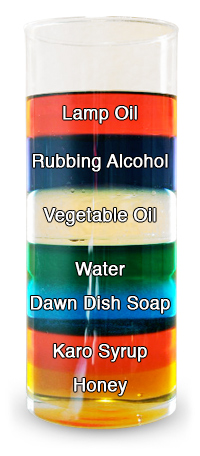
So what is density really? Density is defined in the chapter as 'how closely packed together the particles are.' The real mathematical definition of density is 'the mass of an object divided by its volume.' If an object is less dense than the liquid it's in, then it floats to the top of the liquid. If an object is more dense than the liquid it's in, then it sinks to the bottom of the liquid. 

In the science story that involves the eggs and the salt, it is important that students can see the message of how the salt water has an effect on the objects. Some questions that students may have about the Dead Sea are how much salt is actually in the Dead Sea as opposed to the other seas that contain less salt. One experimental design could be for the students to research the Dead Sea and it's actual salt content and compare it to a couple other seas that are around and find important information that compares and contrasts all the different seas. Then, they can do the same salt experiment in the classroom and the students can see how the different salt contents can affect the objects in the water.

I have experienced the 'spiraling' of activities in my science classes over many years of school. You feel like students always say they learn the same thing in elementary school every year and that does seem like it's true in some aspects. Even though I take science classes at a college level, teachers are still making references to the things that we learn in elementary school. For example, there are constant references of things in the solar system, like planets and outer space. Because I've been introduced to these concepts in both elementary and middle school it is a lot easier for me to grasp the concepts and understand the science behind them.

Wednesday, March 16, 2011

Kingdom Quiz Results


These are the results to my Kingdom Quiz! I was a little confused about some of the Protista questions but with the help from my peers we successfully solved the problems and answered the questions. I think that the jigsaw activity was very successful but  I wish we spent more time on it. I know it's very hard to fit a lot in an hour class, but in my classroom I want my students to have a very good idea of what they are learning about and I want them to learn an in depth lesson about it. I think that the students will benefit from doing this activity over a couple week time period in my classroom and I think that they will enjoy the various activities and quizzes that go along with the activity.

Overall, I think that learning about these kingdoms is a very good experience. I think that the earlier that they are introduced to this material, the longer that it will help them in the long run. It is important that they have a good knowledge about the scientific world so they can apply it both inside and outside the classroom. 

Saturday, March 12, 2011

Observing Nature Turns into a Tragedy

This week, I didn't observe nature outside my house. I've just been observing the normal snow melting, birds chirping, and the sun finally coming out. Over in Japan, we have been watching on the News of the Deadly tsunami that hit the coast and left thousands missing, and many loved ones lost.

This natural disaster was a tragedy for everyone to watch and read about in the news. How would you like to get home from work to see your house underwater and your family missing? I would be devastated if that happened around me. It is just terrible to know that there was nothing that could have been done to prevent this, natural disasters occur all the time around us and all we can do is just sit back and watch them happen, and pray for the best for the families who lost their loved ones. I can't imagine having that happen to my home and my family. 

There is so much science around how these things happen and what is done to cause them. Just listening to a clip on the Fox News Website, listening to an geologist speak about the tsunami for just a few minutes caused so many questions to run through my head. He was reporting things like the speed of the waves, and approximately how many hours there were between when the tsunami was threatening to hit the U.S. Coast. Think about how many years of school that this man went through to report these findings about the Tsunami. He had to probably go through every single science class to be successful as a geologist.

We may not realize it, but science is literally all around us. There are so many questions we might have about the world and things like different natural disasters that only certain scientists can answer for us. Even if we just research the basic questions we have about these things, we still may never know all the answers to our questions.

In my future classroom, I think that it is so important for my students to keep up with studying current events and how they relate to the scientific world. I would do this activity about once a week, maybe ask the students to bring in a current event article or talk about something they saw in the news and explain what it means to them, then relate it to a science topic. I think that this is so important for the students to do and the younger they start with these kinds of activities then the more helpful it will be to them in the long run, it allows them to be more independent and eventually do scientific research when they're older all on their own.

Here are some after effects of the devastating tsunami in Japan:


Monday, March 7, 2011

Rain, Rain, Go Away!


As I was doing my weekly nature observations I realized how different the weather here is at my house (in Connecticut) than it is in Newburgh, where school is. There is still so much more snow here on the ground! I couldn't believe it when I walked outside on my back porch and saw that there was a pile of snow that hasn't melted that was still piled up over the railings! Then, on top of what seems like hundreds of inches of snow was a few inches of rain that kept accumulating the whole day yesterday. The inches of rain left remains of soggy grass, slushy snow, and muddy piles in the backyard. I'm so sick of being in this cold weather, nasty rain, and I don't want to see snow anywhere anymore! I just can't wait until summer comes around, my favorite time of the year! For my future classroom, I was thinking about all of the ways in which I can incorporate a rainy day in a classroom. I can have my students do so much observation about the effect that rain has on nature. I can also teach a lesson about how rain is so important for the environment because it pretty much helps things like plants, trees because they need it for survival. I personally don't think that rain is the most exciting thing to observe and talk about and I feel that the students may not be as interested in it as they will feel about other things in nature, but it really does provide some good last minute activities when you run out of things to do!

Chapter Seven: Sustained Inquiry


I think that the lesson in the chapter that was about the fruits and vegetables was a very important lesson that was taught in the classroom. I can relate to this very well because I myself used to work on a farm and I was familiar with the many fruits and vegetables they talked about in the story. I think that it was a great idea that they introduced all of those things in the classroom because it is so important to the students to see where they come from and how their different seeds grow to produce new plants. I also think that it was important that the teacher brought in foods that were similar to the cultures of her students because this allows them to personally relate to experiences from home that they can have discussions about in class.                                                                                            


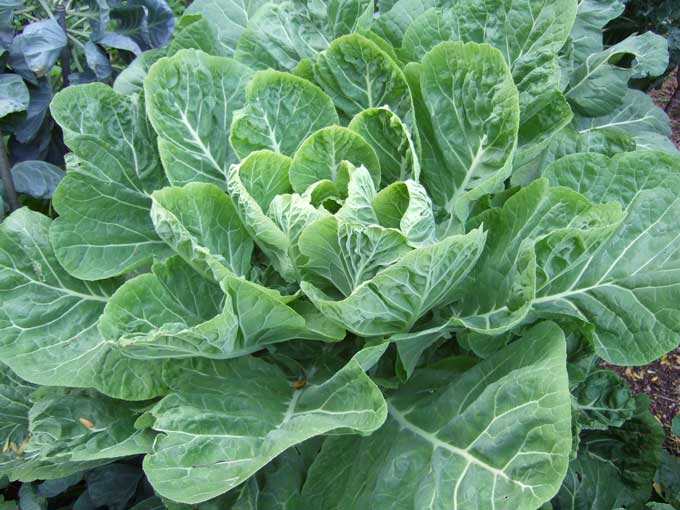
There aren't many exciting plants in my area that I would bring to the science corner, but I would just find a wide array of different plants that have different looking leaves, and maybe bring the leaves in of different trees  so the students can differentiate between them and observe their characteristics. I would encourage my students to ask about where they think that they came from, and how they grow and that's where we can talk about seeds and how they think the process works. I  I I  I think that it is important that students get exposed to this kind of material, because it exposes them to the outside world and allows them to explore science in nature and it is important as a teacher that science from outside is brought into the classroom.

                                        http://www.youtube.com/watch?v=YH2vJ5WmuRk
Here's a great video to watch of a group of kids planting their own seeds to watch grow into a  luscious garden. These kids are so happy that they watched all their hard work of planting and watering finally pay off, and I hope that I can give my students in the classroom that same experience one day!

I do think that in this day in age, our technological revolution makes it very difficult for students to distinguish between living and non living. This is partly due to the fact that in this day in age there are so many students that are curled up on the couch eating potato chips and they never give themselves the chances or opportunities to go outside and explore the world beyond their living room. Students can distinguish many things as breathing, and moving, but there are many things like plants that don't move that are still living. There is a quote in the story that says "students hear the word grow used in the context of nonliving things, like "growing crystals and for something to live and grow means that it needs something from the environment around it." This means that it is so important that students are exposed to nonliving and living things and not only understand that they have those characteristics, but to show why they have them as well. I think that this all ties in to where sustained inquiry is so important to explore in the classroom at a young age. Sustained inquiry is defined as "the development of an extended investigation over a period of time." The more that students develop different investigations in the classroom at a young age, the more confident they will feel when they are on their own in the future and they have the reassurance that they can succeed while doing independent research along with the determination to go out and explore and succeed. What is most important is that they explore what is beyond their living room watching tv and eating potato chips! :)

Saturday, March 5, 2011

Matter Matters: Getting Messy

There is a great quote in this chapter that says"Simply noticing the diversity of stuff in the material world can evoke an open-mouthed sense of wonder akin to visiting a zoo filled with animals you have never seen before."

Exploring all about science isn't necessarily a 'clean' topic to experiment with. As a teacher, it is important to encourage students to ask questions but 'keep it simple' at the same time. This means that it is important to let the students know that a lot of scientific answers may not make sense but this is helping them prepare for adult life. Experimenting isn't all about keeping things clean and neat but it is about making discoveries using different methods and techniques. Experimenting is all about discovering new methods and ideas to help make things easier in the scientific world, and it doesn't necessarily mean keeping things 'neat.' I think it is important for students to get actively involved because this can give them more of an experience to help with their hands on learning. Elementary school is the perfect age for students to begin to learn about scientific process and if they don't get that experience then it will be much harder to grasp the concepts as they get older.

In my classroom it will be interesting to see that students might have a question that I am not able to answer. Even though I am currently a science major, I think that it is safe to say that I may come across things that I may not know the answer to. Science is such a large field with so many different things to study so i'm sure I might come across something that I don't understand. I would then tell the student that they should go home and look up information on the internet about the topic and share it with the class the next day. When they bring it to class, they can go up to the front of the classroom and teach about the topic that they researched. This can help the teacher have a learning experience and give the student a great way to present his ideas to the class and everyone can gain a learning experience out of it.