Sunday, February 27, 2011

Reflection on our Science Circus

as we were completing science circus in class, I was feeling a mixture of emotions. I think science circus is a great idea to do in the classroom. There are so many different aspects of it that I feel like I want to reflect on.
Depending on what Science Circus you choose to complete, these science circuses cover so many of the New York State standards. One of the standards that our science circus covered was standard 4, "Students will understand and apply scientific concepts, principles, and theories pertaining to the physical setting and living environment and recognize the historical development of ideas in science."

The reason why I talked about this particular NYS standard is because after completing the Science Circuses, I realized how important it was to apply these standards to the classroom. These standards are so important to follow because it is important that the students are well rounded in different fields of science and technology. As we went around to all the stations, I realized how many different scientific concepts there were to each station that the students had to have a good understanding of. This is why I thought the science circus stations were very successful. I think that when I have my own classroom and perform these kinds of science circuses, I will maybe do some things of my own that really make it different from the typical science circus in the classroom.

The main thing is this: I would want to spend more time on a science circus, maybe do the same science circus throughout different class periods because I think it's important for students to conduct experiments more than once. The experimental results that you can get from an experiment means the more there is to reflect on. And if the results are different each time, it is important for the students to see how they maybe need room for improvement and how their results differed from one another. Once the students do numerous Science Circuses throughout the school year, they can compare them to one another to see how they were both similar and different, and they can begin to understand how science is around them in so many different aspects. I think that completing this set of Science Circus activities in our class was important to do to get a good view of how a science classroom will be when we become teachers.

I also think that science circuses are important because it gives students the feeling of what it is like to be in an actual classroom with a science lab. Labs are important for anyone who wants to go into the field of science and doing science circuses gives students a good feel of a real 'science setting.' Here's a picture of a lab in a classroom that students can set up different work stations at and then complete their activities at:


Overall, the science circuses are very successful activities to so so students can complete and reflect on their 'scientific minds.' This is a great way for students to complete and reflect on their activities, and realize that in science there is always a means for improvement and there are always new activities that they can be trying! :)


Here's a link to watch a video about our group's science circus!
http://www.youtube.com/watch?v=FSN2piFwA6E

Thursday, February 24, 2011

More Observations of the Moon

These are my moon observations that continue that I have been observing for the past couple weeks. I like that the weather is starting to warm up now so that the sky is a lot clearer at night. It looked like there was a full moon for two days straight, the 18th and the 19th. On the 20th-the 22nd, the moon was very clear and by the 24th, just about half the moon was showing.

While making moon observations over the past couple weeks, it is very interesting to see the changes that I've observed. It is important to know that you may get so many different results by observing the moon, mostly depending on what time you go outside. The moon's rotation could look different to so many different people, so who's to say that someone's observation is right or wrong? Learning about the moon is such a different experience for so many people and it would be very successful to do in the classroom so that student's can get a scientific experience first hand by creating it themselves.

Wednesday, February 23, 2011

Chapter Five Making Connections: Green Science

Go Green!!


The one main idea that I got from chapter five is all about 'going green.' I think in today's classrooms it is so important for students to be introduced to 'going green' so that they can learn at an early age how important it is to start conserving energy, and at the same time they can practice and apply what they learned. The first step of teaching students how to go green is to get them outdoors. It is so important to expose them to the environment outside of playing video games inside, and sitting on the couch watching television. Getting students outside observing nature will definitely help them appreciate nature that much more and will get them involved in so many activities outside.

 I don't remember that many scientific topics that relate to the local environment. The only thing I really remember focusing on are scientific topics that have to do with global warming and how much of an impact global warming has on our society today.
Regarding field trips that I used to take, I don't remember many of them, mostly because I don't remember much of what we did in elementary school. I think these would have been more meaningful to me if I really enjoyed the topic I was studying or if I had some good experience that I always remember. Field trips weren't the most important thing that I really remember as a student.

In the classroom, making connections to students lives is very important and students are able to learn much better this way when they can apply the things to read to their life around them. Because today's world is becoming so complex students get a better sense and have satisfaction knowing that they learned about something that relates to their life.

I think 'naturalistic intelligence' is definitely not a special type of intelligence. What naturalistic intelligence does is it just requires you to go out and expand knowledge about the world. If you never go outside and don't know anything about the world around you then you don't have this kind of intelligence. This is a special intelligence just in the sense that you have to experience it to know what it is like.

I think the most important thing there is to teach students about green science is that they have to start now  to help save the environment in future generations. The teacher must help to teach the student understand how resources can effect their environment and ecosystems around them. The sooner that they start to practice this, the more they will benefit in the long run! :)

Tuesday, February 22, 2011

Science as a process: What is a science Circus?

Some of the things that I found very informational and useful in this chapter was how important a science circus really is. What a science circus is is a classroom filled with different activities at different stations that can enable the students to walk around to different stations where the students can observe and record their results from different experimental designs.
I think the science circus in the classroom is important because it allows students to use processes of scientific inquiry to develop knowledge and ideas about different scientific topics. Using inquiry results in identifying, interpreting data, and drawing conclusions, which is what students do in a science circus. I think that using a science circus in the classroom would really benefit students and help them expand on what they know about the scientific method.

An observation is different from an inference, although it is easy to mix the terms up. An observation is information that is gathered by using your five senses: for example, observing the weather. An inference is a statement you base on your observations, is usually a little more in depth and doesn't only involve using your senses but goes more in depth: for example, you can ask what happened to a particular object in nature, like why does the tree look the way it does?

In everyday life, we are always classifying things and we don't realize it. Classification of things occurs in groups based on similar properties: an example of this would be classifying books based on certain genres, or what many teenagers do is classify people based on stereotypes. Classification is always going on all the time in our heads and a lot of the time we don't realize that we're even doing it.

One very important thing to do in the classroom is to engage students in planning an investigation. This is important because the students need to learn how they are going to conduct an experiment and how they are going to get their results. Going beyond conducting an experiment, they need to do things like figure out what variables they are going to change, how they are going to record their results, and what variables they need to change compared to what variables they need as a control. This takes a lot of practice and the only way the students can practice this is to plan an experiment and practice it in the classroom. This is the time where students can apply the scientific method and all the procedures that they create and continue to practice them so they can practice the scientific methods, and not just talk about them.

If my classroom was given a video microscope to use for two weeks, there are so many things I would be interested in doing. One particular experiment that I would want to conduct is observing Daphnia under a microscope. Daphnia are just simply little creatures that you can find in pond water, some like to call them 'fleas in the water.' The reason why I would want to do this in my classroom is because I observed Daphnia recently in my biology lab and I thought it was very interesting to report. I think that this would be good to do in the classroom because it allows students to again use the process of the scientific method to make both observations and inferences about the topic that is being studied and then explore outside of things that are found in the classroom. Even as an activity to do before observing under the microscopes, the students can go outside by a pond and try to collect pond water samples that contain daphnia. This was a very successful experiment in my lab that I would love to share with my students!


 This is a picture of a daphnia that I would allow for my students to observe                
    under the microscopes!

Monday, February 21, 2011

What ever happened to people saying 'Spring has Sprung?'


As I was observing nature today I thought to myself how sick I was of seeing all this snow on the ground. I would love to see another color besides white on the ground every day. We get a few nice days in a row that is almost a tease because that nice warm weather that we thought we were getting and hoping for spring has quickly gone away. The question that seems like is constantly going through my head is: When is spring really going to start, because it seems like forever.

What is spring? Do we really consider one nice warm day out in the middle of February 'spring?' I would love to think that, but unfortunately we just got hit with a couple more inches of snow that ruined all of my thoughts of thinking about spring. Dictionary.com defines spring as "the season of the year following winter and characterized by the budding of the trees, growth of plants, and the onset of warmer weather." I guess that means that when people say that "spring has sprung," they see some kind of plants budding or leaves growing.

That just makes me so sad. I personally have always been a summer person and I live for spending those warm summer days at the beach and being able to walk around barefoot on a hot summer day. Even in the spring it is exciting to see that the cool weather has finally gone away and that some kind of warm weather is approaching, the leaves are starting to bud on the trees, and the wildlife is starting to come out of hibernation mode. The feeling of talking about spring makes me so excited for the warm weather to come. I am so sick of always blogging about the cold weather, the icicles that I constantly see, and the inches of snow I feel like i'm always walking around in! Spring break is just around the corner and I hope by then the weather is a lot warmer and I get a lot more excited about going outside. Maybe then I can finally say "spring has sprung!"


These are some pretty flowers that bloom on the trees when spring comes around.


This is the water flowing around a pretty lake in the springtime.

See, these pictures show that spring is around is all of the time. I hope that I can say 'spring has sprung' soon!

Friday, February 18, 2011

observing the moon again

Here are just some more observations about the moon....I finally saw a full moon! although it was a little bit cloudy. But, i'm just so happy that this weather is finally clearing up, it's a sign of relief that at least I am finally able to see the moon!

Rocks!

Today in class, we observed many different rocks. Rocks don't seem very exciting but when you actually take the time to obseve them, it really is interesting to see how they are made and what they look like. The four different rocks differed in so many ways and it is so interesting to see their different colors, textures, and shapes. One of the rocks reminded me very much of clay with its smooth texture and brown color. Another one of the rocks fell apart right away, so I think that means that is was very old and was wearing away. The other three rocks seemed to have a rough texture, and were different shapes. It is just interesting to think about the fact that those rocks could have been formed so many years ago, but we really have no idea when.

Nature is such a mystery! I mean, there are so many questions about nature that no one can answer off the top of their heads. Not only regarding rocks, but all different kinds of nature is just so important to see what is always around us that we don't even notice. This classs is really teaching me to start to appreciate all the nature that is constantly around us that we take advantage of. Nature really is a beautiful thing that I am finally learning to appreciate!


Rocks come in all different sizes, from big to small, we can still see them all!


These rocks look gray, 'bumpy', and my assumption is that they are very old. I am making an assumption that these rocks formed many years ago.


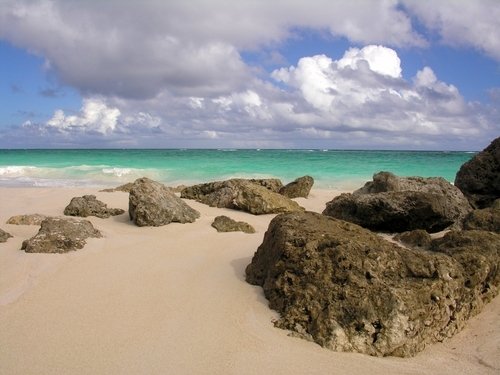
These are my favorite kind of rocks, just because they are at the beach. I love the beach! Some rocks at the beach are very smooth probably because they are constantly hitting the sand and the water. I can't wait to go to the beach this summer! where I will be sure to observe all the rocks so I can one day talk about them in my classroom!

Wednesday, February 16, 2011

Science in the News discussion

After the class discussion about the science in the news articles, I started realizing how important it is to keep up on the current events in the 'scientific' world. There are so many reasons why a class discussion is important and why it is so important to get kids to keep up on the science around them.

  • It is so important to use interaction in the classroom to get the students talking and sharing their ideas about what they learned about the scientific world
  • It is very important to have a reporter in the classroom, so the reporter can expand not only on their ideas, but everyone else's around them, to get their mind's going about something in a different perspective
  • It is important for students to realize how broad of a category science actually is..science isn't always about the scientific method. Science is in so many different forms, that we can see in many current events that we research about.
  • Looking up articles in the news uses so many different skills that include analyzing, classifying, observing, reflection on, and predicting. 
  • I think that looking up science in the news is so important to do in the classroom so students can keep up on current events, and they can expand their minds in other scientific ways that they normally don't use in the classroom.
I think that this activity was overall a positive experience and is important to do in the classroom for students to keep up with knowing about their current events in the world.

Monday, February 14, 2011

I'm finally learning how to make connections!

As I was reading chapter three, I was just simply reading all of the things that we reviewed in class. Most of what I was reading was just reinforcing what we have been having class discussions on the past few days. I got to the section about alternative conceptions and then I found it very interesting to read about how it means that the idea may not be "scientifically correct", but it still shows an understanding of the concept. This is important because it helps me to better understand how I can help the student evaluate all of his ideas as a future teacher.

The next thing I then read about was Scaffolding. What scaffolding refers to is teachers helping their students gain a better understanding of their learning,  the book says that learners need "scaffolding support by teachers to develop their science understanding." As I was reading this and understanding the chapter, I almost had an epiphany. In my Language Arts methods class we are learning a lot about scaffolding, we actually have a whole book about scaffolding that refers to what it is about and how to teach it. That's when I started making connections, that it's not only science that is all around us. Science is the thing that is around us physically, just the things like when we look outside and observe science, or do science in the classroom and follow the scientific method. But, I just am starting to learn how important it is how much more goes into teaching science in the classroom that is outside of the scientific method. Then, I started applying that to the fact that teaching science isn't the most important subject, but every other subject goes into teaching science and is as equally as important. Teaching about science doesn't just require knowing the scientific method, but so much more goes into actually making the students understand it. Students must understand and comprehend the lanugage used in the classroom to apply it to scientific ideas and procedures.
One of the first ways to do this is by teaching students about scaffolding. Scaffolding helps lead the students in  a positive direction to having a better understanding about problems and things they have to study.

This really does go to show how science is always around us. It's not just around us physically, but learning about these terms and phrases that are being taught in other classes as well are very important to understand so you can teach your students not just about general things, but the meaning behind them as well.

Now that I am starting to put all of this together I am feeling a lot better about all this material that I feel like is being thrown at me and I am excited to make more connections from the text to our class!!! (or in this case...all my classes!)

Saturday, February 12, 2011

Moon!

The first time I finally was able to see the moon was the 7th of February. The couple of days before that, the sky was too foggy to see the moon. But, I didn't observe much besides what I saw of the crescent moon the past couple of days. Here's what my observations looked like all the way through Friday: 2/11:


Thursday, February 10, 2011

Just another nature observation

For this week's nature observation, the one thing that I was glad to see was that there wasn't what seems like a million feet of show on the ground. It's finally melted and I can actually see the sidewalks now...what should I call that, a sign of relief? Anyways, walking to the library this morning I could not get over how windy it was. I really should invest in a ski mask for this campus... But anyways, even though I could barely stand walking in the cold I noticed such pretty things walking around campus. This really is in a beautiful area near the water. All around me were Icicles hanging off the branches swaying around just waiting to fall off. The wind blowing the trees back and forth just produced a constant howling noise. As cold as it is outside, it really is worth stopping for a minute to look at all the pretty trees around. Soon enough, the warm will come and there won't be any icicles hanging off of those branches. And that's what I'm looking forward to the most!!!!


Tonight....it's on to observe the moon. Right now all my moon drawings are in my notebook but once I get enough time i'll be sure to catch up and post all my drawings to my blog!

Thursday, February 3, 2011

a little bit of Nature here and there

As I was walking to class this morning, I never really took the time to notice the nature around me until I was told we had to for class. I noticed a lot of interesting things that I would never have noticed on my normal daily walks. Just looking around me and feeling the nice, crisp air around me really made it enjoyable to be around.

I noticed so many different things, the snow melting on the ground started leaving puddles and the sun shining directly into them made them give off such a bright glare. The dirty snow was kind of annoying to shuffle my feet through. When is this snow supposed to end, i'm sick of this cold feeling on my feet!

The amount of icicles that are hanging from the buildings is a little scary. It is scary to think that those things can fall off the building at any second, even if you're directly under them! Besides those things, nature is so fascinating to me. I mean, it is so interesting to think that nature is always changing and always around me. Nature is constantly changing and it is very fascinating to see how much it has an impact on your day to day life.

Day One of Class: A mixture of emotions

I was excited as I waked into class on the first day of school. It was almost like I was a little kid again walking into my fourth grade science class looking around for all of my friends. I was particularly excited knowing that we were going to be doing science so I was looking forward to this class.

The first seat that I sat at was at the emptiest table. I just recognized a couple of faces of people that I have seen in the previous education classes that I have taken.

Once class started, I was a little overwhelmed with all of the online use there was. I thought to myself, what happened to teachers using a paper and pen and printing out the syllabus to hand to us in class? After going through all of the online assignments in class, I felt a little better about it. I was a little more open minded about it and thought that using all of these online resources will only benefit me in the long run. I look at the internet now as an important tool to use for when i teach in my own classroom. It is important to get to know how to use the internet in a wide variety of ways to use for when I become a teacher.

At the end of the class period, I was still a little overwhelmed but I know that hopefully all my hard work that goes into science will only help me and will be a great learning experience for when I have my own classroom!