Tuesday, May 10, 2011

My final reflections about Science Methods


As my last day of Science Methods came to an end, I finally started putting the puzzle pieces together and all the things that Dr. S introduced to us throughout the semester finally served some purpose to me. I was at first definitely scared and overwhelmed at everything that was thrown in front of me at once, from blogging, to pbworks, to using technology, this class opened up a whole new world for me. But as time went on, I was very thankful with the help of Dr. S to constantly be there all the times I needed help, whether it was through google chat, google docs, e-mail, or just simply stepping foot in her office.

Blogging was definitely an enjoyable experience for me. It was nice to post the things I saw in nature, or read about in my Science Stories book. I think that blogging is a fun and creative way that allows for me to share my thoughts and experiences, especially in the scientific world (because I myself am currently a science major.) It was a great idea to be able to share these things with my classmates throughout the semester.

We did many hands on activities in the class that I will definitely consider using in the classroom in the future. I would have liked more time to complete the activities in class, but it was just very hard because of our 55 minute class period. Science Circus was definitely a great experience in the classroom that I would love to use with my kids in the classroom. This allowed us to use inquiry to explore many scientific ideas: like buoyancy, floating and sinking activities, and collecting data and gaining results from the data. This was a great way to get students moving around the classroom (so they aren't sitting at their desks all the time) and to get them to try out different experiences to see what they really do enjoy compared to  what they don't enjoy as much. The kingdom Jigsaw activity was also great to use in the classroom because it allowed students to explore their own individual topic and then teach that topic to the class. This was important because students get to be creative and present their topic, rather than the teacher doing it for them the whole class. These two activities really were a great way to allow the students to use inquiry and to get a hands on experience using science in the classroom.

Regarding Fieldwork, I really did enjoy working in Mrs. Benfer's 5th grade classroom. I think it was definitely a great experience regarding the fact that we actually stood in front of the group and we were able to teach our own lesson to the class. Many fieldwork hours that I've done in the past have strictly been observing, and i think that this was a great fieldwork experience because we got to work with the class and teach them a lesson and allow them to do hands on activities, just as we would if we were teachers. The class was definitely a great class to work with because they were probably so used to college students coming into the class to observe. They were very welcoming to us when we came in and they were understanding of our goals to become teachers. This was overall definitely a great environment to work in and I really enjoyed observing and Bishop Dunn Memorial School and I really did gain a positive experience from this particular fieldwork session. Fieldwork has also helped me to grow as a person and it allowed me to see the areas that I need to improve in along with the other areas that I really grew in throughout the semester. I have a much better understanding of what it is like to work in front of the classroom and teach a lesson and that really did help me to prepare better for the future so now I can go into fieldwork with a much more positive aspect and feel much more confident about the goals I want to achieve in the future.

The E-folio project was definitely an interesting project to tackle...to say the least. I definitely don't mean this in a bad way, but because it was such a new experience for me it was a little overwhelming to me. But as soon as I opened up to the idea about completing it and started learning a little more about it, it really was an exciting thing to complete. The e-folio focused on every aspect of every topic that I completed this semester, and that is really what was the most important thing for me to do. I think that th E-folio was a great way to present my work in a creative way that allowed for me to express who I am and where my areas of interest really are. I particularly enjoyed Amy's E-folio because I felt that she presented all of her knowledge in a very sophisticated manner and she put a lot of time into perfecting her e-folio, which really makes me see that she wants to be a teacher and she is achieving her goal now in a very positive and successful manner.  I will definitely use this as a tool in my classroom, along with all of the other technology that I have come across throughout the semester.

Overall, this course was a great learning experience for me. I mostly say this not only with my classroom experience, but with my knowledge of technology as well. I grew so much in this course and my knowledge of technology in the classroom really has expanded. As a teacher, I have discovered so many ways to involve my students in the world around them and show them that I care by always putting them ahead of me and making their education my first priority. Keeping this in the back of my mind as I go through school will definitely motivate me and help me understand that all of this hard work is eventually going to pay off, and before I know it I am going to be just like Mrs. Benfer!

Sunday, May 1, 2011

It's eel season!

Eels

For my nature observation this week, I decided to talk about something different than the weather, which is what I usually talk about. For my Biology lab we have been going to Quassaick Creek in Newburgh to observe the Herring that have been passing through, and this past week we set up an 'eel' experiment. Believe it or not: we literally went into the creek in wet suits, set up the net, and caught eels in the net. But don't worry, we let them go afterwards!

The whole purpose of this experiment was to understand how the eel population and how it is declining in certain areas. What we did with this information of the eels was we weighed and counted the eels, and we used this data just as a basic measurement of the eel population around the Hudson River area.

This experiment is the perfect example of something that I would love to do in the classroom with my students. I loved having this hands on experience with my professor, and I would want my students to have the same experience. I think that it is a great way to get students outside the classroom and it is a fun and exciting topic that still involves things in the scientific world. This really did make me understand how science is all around us all the time. We can see science in so many different things through observing, collecting data, using inquiry, and gathering results. This all leads to a comparison of other data and leads to new ideas being discovered, and understanding that science is constantly around us, and we can see this in something like studying eels!

Saturday, April 23, 2011

21 things that will be obsolete by 2020


Reading the article about things that won't exist by 2020 is really a scary idea. It is so scary to know that the common things that we use today like desks, library books, homework, and even paper will be obsolete in less than ten years. It is even scarier to see how that is going to affect teachers in the classroom. Teachers in an elementary school classroom will soon be using blogging, online homework assignments, and e-mail to communicate with their students. It's scary to know that when I was elementary school, I barely used a computer and I really had no reason to use one. It is so interesting to see how technology is changing day by day and before I know it, I will be teaching my own students how to blog, just as I learned in my college class! I just hope that parent teacher conferences still happen and I think that face to face interaction is much more important than talking about things over the internet. The line has to be drawn somewhere and I have a strong belief in communicating with parents face-to-face, just as my mom and dad did with my teachers. I am very interested to see what life is going to be like in 2020 and how it is going to effect my classroom. I guess I won't be able to find out for another nine years. Until then....I have to get back to my desk to work, because that might not even be around in a few years.

Wednesday, April 20, 2011

From Powerpoint to Prezi?

I just used Prezi for the first time yesterday and I had a lot of mixed emotions about it. I am so used to using power point and creating slide after slide and using Prezi was like a whole new world to me. I think that Prezi is a great tool to use in the classroom for the students. It is a fun way to get students engaged in the classroom without asking them to stare at a powerpoint. It is fun and the students can even get involved with using it by going up to the board and sliding the text around and doing things themselves rather than the teacher doing anything to them. 
I created a Prezi about Chemical Reactions, which was the lesson that my group taught in fieldwork to the class. Once i figured out how to use this and I was more familiar with it, I really enjoyed doing it and I hope that I can use this experience in my future classroom! :)


Here's the link to my Prezi and I hope that you can enjoy this new use of technology and get a great experience from it! :)

Thursday, April 14, 2011

What's the Big Idea? Matching Assessment to Instruction

It is very important to use multiple forms of assessment in the classroom. There are many different forms of assessment and those forms include:
Science Assessment- A process of collecting information that is used to determine the quality and character of a certain performance.
Formative Assessment- used to interest student's in a particular topic
Summative Assessment- used to document the student's achievement at the end of a course
Performance Assessment (also known as authentic assessment)- Student's demonstrate their understanding by solving a problem or performing a task in the real-life context of their classroom
      It is important to use all of these forms of assessment so that students can activate their knowledge in many different ways, and not just by taking tests. Taking tests actually isn't a good assessment to practice because many times it just shows that students can memorize an answer rather than showing that they learned about a specific concept. Assessment and Instruction are two things that have a strong correlation to one another because they are both used to successfully solve a problem and create a scientific idea. 
     Another important assessment tool that teachers use is writing. There are many ways for students to record a description of their science ideas and activities which they are engaged in. The use of science notebooks is encouraged because students here can describe their investigation in specific formats and they can engage in their findings and express their opinions about the experiment that they conducted. Students don't have to focus strictly on just writing but they can also do things like draw pictures, tell stories, and draw models about what they experienced in the classroom. This is a very creative way that allows students to express their feelings in many more fun and creative ways.  
In classrooms I have seen many different presentations and performance assessments. In my science classes today, I see many powerpoints. We have to create powerpoints when we finish our experiments in the lab and present them to the class. This is a great way to show the class and the professor what we learned and also to present it by using technology rather than handing in a written assignment. I think in my classroom, I will encourage students to use these kinds of things so that they can express their experimental design and creativity in many ways outside of using a pen and paper and turning in a written assignment. I also think that the students would enjoy those things much more and will give them more motivation to learn in the classroom.
       If I created a portfolio for my science methods course, I would be sure to include all my work from the semester in it. But one thing that I would focus on is my fieldwork experience. I think it is important to show how my fieldwork was a success along with my lesson plan that was written with it. I will include copies of things like my moon blog, website assignments, and other things that we did in this course throughout the semester so that I can show what I learned throughout the course. I think it is important to show all the hard work that was done throughout the course and I will also encourage my students to express their work so that they can feel proud of all of their accomplishments. 
       I personally think that it will be hard to get my students to blog at such a young age. I don't think that I would have them blog about their earthworm activity but instead, they can express their creativity in other ways like take pictures and bring them into class to discuss.
       Overall, this chapter stresses how important technology use is along with students publishing their work and I hope that I can give my students a successful experience in all of these aspects of teaching in the classroom! :)

Saturday, April 9, 2011

Our Last Day of Fieldwork

We ended our last session of fieldwork the other day and I had many mixed emotions about it. Doing fieldwork in Mrs. Benfer's class was a great experience and she was very helpful and very willing to work with us throughout all the sessions we attended. Mrs. Benfer was very helpful in talking us through the sessions to successfully teach our lesson and make the children happy. Mrs. Benfer made me realize how important it is to have a positive attitude towards the students so that they can become enthusiastic about the subject and really enjoy science just as much as she does. I loved how she gave us the opportunity to work hands on with the entire class by teaching the class a lesson rather than just the normal one or two students we are usually assigned. She really opened up my mind to a whole new experience and I loved that I was able to have that experience hands on in the classroom in front of the class. I only have a couple wishes about the experience, and that is that I wish we got more time with the students so we were able to have a little more time to complete our lesson successfully. I know that it was very hard to coordinate us and that every second in the classroom helps, but if we had more time to complete our lesson I think that the students would have enjoyed it more and it would have been a little less stressful situation for the group teaching the class. Also, because it was our first time teaching it was hard to manage our time under pressure because we never really know what that was like or have had to experience that situation. Overall, I think fieldwork was a very successful period and it gets me more and more excited knowing that one day i'll be just like Mrs. Benfer! :)

Here's a picture of me working with the student I was assigned to in class, reading the chapter about chemical reactions.

Sunday, April 3, 2011

Planning for science: Lesson Plans and Instructional Strategies


It is important to "let go" of your lesson plan in order to benefit the students. "Letting Go" means giving the students responsibility of the lesson in their own hands, while still continuing to guide them and lead them to successfully complete the lesson or experiment. As we saw back in chapter 8 in Mrs. Drescher's class; the students were supposed to be exploring all about liquids but instead they ended up turning what they discovered about liquids into a lesson about density. It is important to make an original lesson plan to begin with, but then the students shouldn't just complete the lesson because it was something they read on the paper. It is so important for the students to use their own techniques and explore what is around them and make new discoveries. Science is all about making discoveries and it is important that the student's start making discoveries at a young age because any discovery they can make about science while they are younger can help them so much year after year while they're in school, no matter what kind of science class they are taking. 


Allowing for the students to ask questions is a key element for students to successfully explore and "let go" on their own. Open ended questions are great kinds of questions to introduce to kids because it allows them to think critically and in a different way besides 'true false' or 'yes no.' (which are like questions for understanding) which don't inspire students to use their full potential in the classroom. These kinds of questions are also important because they can activate the prior knowledge of the student's and if they know something like that, then they are more likely to be interested in the topic because they are going to enjoy doing something they already know about. I have a teacher today, in my college biology class, who uses this technique of making me think. She teaches the material beyond the book and reading directly off the slides. She encourages us to participate in real class discussions that allow us to expand our mind and look at the material from many different perspectives. This has really helped me to understand how important it is for students to be introduced to this at a very early age. 


Regarding cooperative learning groups benefits students in many ways because it allows them to gain many social and educational situations. It also leads to constructivism so students can encourage other students opinions and ideas and they can defend or altar their thinking so that they can encourage each other to make new discoveries. Cultural diversity is also very important for teachers to understand because it allows the culturally diverse students to interact with the other students in the classroom and feel more welcome. Most importantly is that they can even share stories from their cultures to expand everyone else's knowledge in the group and allow for them to further investigate new questions about so many different topics that are around them. Assigning them group roles keeps them on tract to promote group efficiency and make sure everyone is participating in the group. In my classroom, I will definitely use all of these ideas to successfully complete group activities and promote unity in my classroom and make sure that everyone works successfully together! :)


Sunday, March 27, 2011

Hudson River Estuary Program

                                                     Hudson River Estuary Program Logo
I decided to observe on something in nature that was besides the ordinary 'talking about the springtime' blog.
Earlier in the week, I attended a very interesting seminar presentation in my Biology class that was put on by workers from this particular program called the Hudson River Estuary Program. What this program does is it improves the Hudson River water area for all of the residents to ensure clean water and a clean area for the animals who live in the water. This organization is always looking for volunteers in the many different areas where they do experiments on. These areas include researching Eels, River Herring, and even different kinds of trees                
                                

I didn't even really know what herring were until I went to this presentation. Herring are a specific kind of fish that travel in schools and one of the projects that they research are the amount of Herring in the waters along the East Coast. River Herring along the East coast are declining due to many factors like invasive species, issues with the water quality, and an increase in predator population. One Herring monitor activity that they talked about was for volunteers (they can be anyone: children, college students, or adults) to go out to certain spots along the Hudson and they count the number of Herring that they spot there for a time period of fifteen minutes throughout different times of the day. This usually occurs over a two month period from the beginning of May to the end of June and it's importance is that the Program can get a good idea of how the Herring population is continuously changing over the years and and how it is affecting the life of their species.

As I was listening to this seminar, I started thinking of ways that I can do fun things like this with my students in the classroom. I think it is so important for students to get outside of the classroom and get a hands on experience in so many different fields of science that allows them to use their creativity and experience the scientific world in so many different ways. It is so important that students explore things outside the classroom and explore nature in the scientific sense. Students love this kind of stuff where they get the chance to go outside the classroom and play around and explore things in nature. When I have a classroom I would love for my students to get outside and observe what's around them. I think one of the most important things in my classroom is to do different hands on activities where students can interact with the environment and learn so many different concepts and methods that they can apply in other situations throughout their life. I can't wait until I have my own classroom and I can use these kinds of activities for my students to have a positive learning experience from! :)

Moving Beyond the Science Kit


    Student's learning about the history of science today is so relevant because they can apply what is taught in the classroom to how science was created in the past. Learning about the basic history of science, just even about some famous scientists who taught about some basic models and introduced some science vocabulary is important today because that is the vocabulary that teachers have to teach in the classroom. In Mrs. Murray's class, they presented a timeline of the 'atomic theory'. The atomic theory relates a lot to what they are learning about in class, the atom. She asked each group to present their scientist until they realize that each scientist plays an important role in history, and they each build on one another to create a specific idea during that particular time period. 
     This isn't just seen in something like the atomic theory but this chapter teaches how important it is for students to learn the history of science. By doing this, students can see how scientific ideas each relate to one another, and how science has changed over the years due to the many discoveries and experiments that have been created. Even though some ideas may just be very small discoveries, they still lead to the discovery of bigger and more important things. Learning the history of science is so important for students to understand so they can further understand the scientific ideas of many generations in the past. 
     I think working with mystery boxes is such a creative idea to do in the classroom. I don't specifically remember any certain activity in the classroom where we used 'mystery boxes' to determine what was in the box, but I think it is such a creative way to allow students to use their creativity and apply using their senses in fun and creative ways. This also allows them to help build their confidence in being sure of their answer, no matter if it is right or wrong. It is also a fun activity for kids to do that doesn't allow them to just write things down with a pen and paper, and it allows for them to do scientific activities in fun and other exciting ways. 
    I think it is so important for students to use other various objects that they can find everyday around the house to build scientific models in the classroom. Mrs. Murray posed a design challenge for her students and she explained how she will bring certain materials such as clay, rubber bands,and Popsicle sticks, then allows for the students to bring any kinds of materials they want from home. After they brainstorm and do research, they can use their materials to create possible models for their design. I think this is a great idea to do in the classroom and I will definitely incorporate this kind of activity in my own classroom. This activity can even be used as an idea for science circus, and one idea can be that students use all of their objects that they are given to build a model out of. It is so important that students use their minds in creative ways by exploring what they can do when they have to apply their knowledge by using their other senses besides writing things down with a pen and paper. I can't wait to have my own science circus in the classroom! :)


Here's a great video about the atomic theory I found that is great to use in the classroom!


Reflection on Fieldwork

Walking into Mrs. Benfer's 5th grade science class gave me so many emotions running through my head. I was nervous because I wanted to make a perfect impression to the students in the classroom and I wanted them to have a great experience with our class.
Right when we walked into the classroom was so exciting. To see the look on these students faces of joy, excitement, and they were just so excited about the fact that they got to work with a college student! I love the look on the kid's faces of them knowing that they have so much to learn and the fact that I can help form their new minds into some great knowledge that they will use in the years ahead of them. After the lesson of mixtures and solutions were taught to the class, we were all asked to divide up with the students into two separate classrooms. I had so many thoughts going through my head..like 'what if I don't know an answer to one of their questions?' or ' What if my student that i'm paired with doesn't like me?' I think that that was actually my first concern as a teacher. That's when it actually hit me that it is so important for the students to be learning in a positive environment and how I help them to learn is so important. As the period went on I just introduced myself to my student and then helped him complete the activity he was working on. Overall, our first day of fieldwork was a positive experience and I can't wait to teach my lessons to the class and work with them some more! The teacher was great, very cooperative, and I don't think that I would want to be anywhere else observing! :)

Saturday, March 19, 2011

Virtual and Concrete Models: Explorations in the Solar System

 Desktop Wallpaper · Gallery · Space 
 Solar System

When you think of a model of something, what comes to your mind? A model of something is usually a physical structure, it is something that represents an object. Modeling something is a good experience that helps the students remember certain things and ideas for future reference. For example, in the beginning of the chapter the man used his tooth model on display and then when he needed a root canal in his mouth, he remembered his model of a root canal he made. I think that models are so important to use in the classroom and they never get old, they can be used at any particular level of education. 
Making models is a 'hands on' activity that students can do to help them remember the material better, and it doesn't just involve using a pen and paper to write with. Building a model is similar to calling it a 'Constructivist' learning experience. Constructivism is 'a family of theories about knowledge and learning. This means that knowledge is not passively received: Rather, knowledge is actively built up by the learner as he or she actively experiences the world.' This is why making models is so important, because it helps students experience the world in other ways. 
This is why it is important for the students to make a solar system model with common fruits and vegetables, because this allows them to experience the world in other creative ways besides using the telescope to look for the planets. This is another way that students can imagine the earth and world in much more creative ways besides just looking at it directly. Students here can use their creativity and use so many different objects to create the solar system, then they can even make a compare and contrast chart that shows the difference between the two different models. By even observing, they are getting a good idea of what it looks like and they can just observe and don't even have to do anything for the class. For example, by them just observing the moon they don't have to do anything like blog about it, but they can simply use their imagination and draw what they see and how they see the moon at night. Once they draw it, they can bring their drawings to class and share their experiences with the whole class. 
Just asking them to observe the moon is already introducing them to the scientific process, and they don't even realize that they're doing it. Observing is a key idea in the scientific world that gives scientists so many things to reflect on, by simply just observing one thing can open their world to so many different ideas. I think this is very important to start teaching kids at such a young age.

Another thing that can be observed is observing the earth from the moon. What do you think was going through Neil Armstrong's mind when he first landed on the moon? How fascinating would that be to see and go through such an exciting experience. Looking at the earth from being on the moon would be so fascinating. It would look similar to how we see the moon, we would see it in different phases, and 'waxing' and 'waining.' It is important that we let students know this so that they can expand their minds in so many different ways. Outer space is such a fascinating thing to learn about and it is so important that students can be introduced to this at such a young age and how it can help them so much in the classroom in their many years to come! 


Here's a great link for kids for some great activities to use in the classroom! :)


Spiraling Curriculum: Explorations of Density

It is so important that schools adhere to a specific curriculum to help students learn the proper material they need to further continue their science experiences in the following years. For example, Ms. Drescher's class stumbled upon the concept of density and they were originally trying to study the volume of the liquids. All of the students experiences somehow intertwine together to be put to use when the students are learning about science in the future years of school. This is why it is so important that schools follow the proper curriculum in the classroom so that they don't forget any important moments in helping with the students learning. The fact that she was teaching them about volume and that led into another discussion about density is a perfect example of how the students need to learn the proper material the goes along with their classroom activities so  that they can learn all the information, plus much more, that they need to expand their scientific minds.

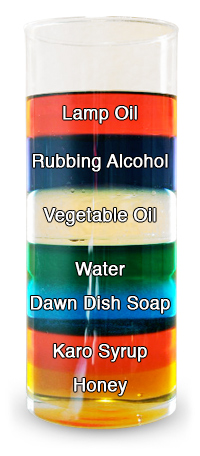
So what is density really? Density is defined in the chapter as 'how closely packed together the particles are.' The real mathematical definition of density is 'the mass of an object divided by its volume.' If an object is less dense than the liquid it's in, then it floats to the top of the liquid. If an object is more dense than the liquid it's in, then it sinks to the bottom of the liquid. 

In the science story that involves the eggs and the salt, it is important that students can see the message of how the salt water has an effect on the objects. Some questions that students may have about the Dead Sea are how much salt is actually in the Dead Sea as opposed to the other seas that contain less salt. One experimental design could be for the students to research the Dead Sea and it's actual salt content and compare it to a couple other seas that are around and find important information that compares and contrasts all the different seas. Then, they can do the same salt experiment in the classroom and the students can see how the different salt contents can affect the objects in the water.

I have experienced the 'spiraling' of activities in my science classes over many years of school. You feel like students always say they learn the same thing in elementary school every year and that does seem like it's true in some aspects. Even though I take science classes at a college level, teachers are still making references to the things that we learn in elementary school. For example, there are constant references of things in the solar system, like planets and outer space. Because I've been introduced to these concepts in both elementary and middle school it is a lot easier for me to grasp the concepts and understand the science behind them.

Wednesday, March 16, 2011

Kingdom Quiz Results


These are the results to my Kingdom Quiz! I was a little confused about some of the Protista questions but with the help from my peers we successfully solved the problems and answered the questions. I think that the jigsaw activity was very successful but  I wish we spent more time on it. I know it's very hard to fit a lot in an hour class, but in my classroom I want my students to have a very good idea of what they are learning about and I want them to learn an in depth lesson about it. I think that the students will benefit from doing this activity over a couple week time period in my classroom and I think that they will enjoy the various activities and quizzes that go along with the activity.

Overall, I think that learning about these kingdoms is a very good experience. I think that the earlier that they are introduced to this material, the longer that it will help them in the long run. It is important that they have a good knowledge about the scientific world so they can apply it both inside and outside the classroom. 

Saturday, March 12, 2011

Observing Nature Turns into a Tragedy

This week, I didn't observe nature outside my house. I've just been observing the normal snow melting, birds chirping, and the sun finally coming out. Over in Japan, we have been watching on the News of the Deadly tsunami that hit the coast and left thousands missing, and many loved ones lost.

This natural disaster was a tragedy for everyone to watch and read about in the news. How would you like to get home from work to see your house underwater and your family missing? I would be devastated if that happened around me. It is just terrible to know that there was nothing that could have been done to prevent this, natural disasters occur all the time around us and all we can do is just sit back and watch them happen, and pray for the best for the families who lost their loved ones. I can't imagine having that happen to my home and my family. 

There is so much science around how these things happen and what is done to cause them. Just listening to a clip on the Fox News Website, listening to an geologist speak about the tsunami for just a few minutes caused so many questions to run through my head. He was reporting things like the speed of the waves, and approximately how many hours there were between when the tsunami was threatening to hit the U.S. Coast. Think about how many years of school that this man went through to report these findings about the Tsunami. He had to probably go through every single science class to be successful as a geologist.

We may not realize it, but science is literally all around us. There are so many questions we might have about the world and things like different natural disasters that only certain scientists can answer for us. Even if we just research the basic questions we have about these things, we still may never know all the answers to our questions.

In my future classroom, I think that it is so important for my students to keep up with studying current events and how they relate to the scientific world. I would do this activity about once a week, maybe ask the students to bring in a current event article or talk about something they saw in the news and explain what it means to them, then relate it to a science topic. I think that this is so important for the students to do and the younger they start with these kinds of activities then the more helpful it will be to them in the long run, it allows them to be more independent and eventually do scientific research when they're older all on their own.

Here are some after effects of the devastating tsunami in Japan:


Monday, March 7, 2011

Rain, Rain, Go Away!


As I was doing my weekly nature observations I realized how different the weather here is at my house (in Connecticut) than it is in Newburgh, where school is. There is still so much more snow here on the ground! I couldn't believe it when I walked outside on my back porch and saw that there was a pile of snow that hasn't melted that was still piled up over the railings! Then, on top of what seems like hundreds of inches of snow was a few inches of rain that kept accumulating the whole day yesterday. The inches of rain left remains of soggy grass, slushy snow, and muddy piles in the backyard. I'm so sick of being in this cold weather, nasty rain, and I don't want to see snow anywhere anymore! I just can't wait until summer comes around, my favorite time of the year! For my future classroom, I was thinking about all of the ways in which I can incorporate a rainy day in a classroom. I can have my students do so much observation about the effect that rain has on nature. I can also teach a lesson about how rain is so important for the environment because it pretty much helps things like plants, trees because they need it for survival. I personally don't think that rain is the most exciting thing to observe and talk about and I feel that the students may not be as interested in it as they will feel about other things in nature, but it really does provide some good last minute activities when you run out of things to do!

Chapter Seven: Sustained Inquiry


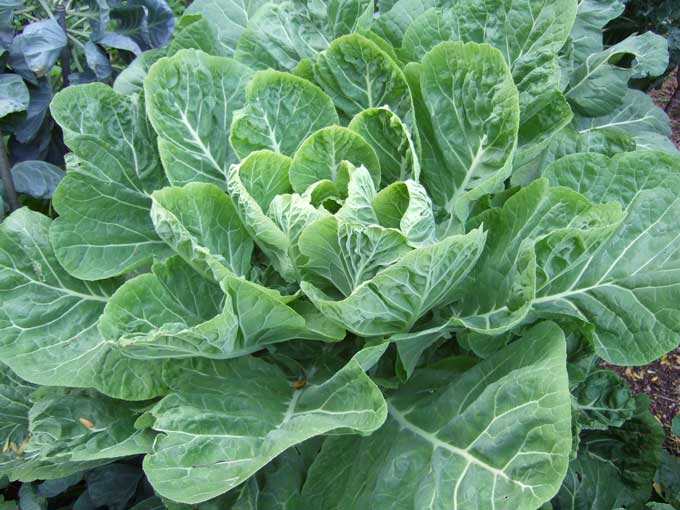
I think that the lesson in the chapter that was about the fruits and vegetables was a very important lesson that was taught in the classroom. I can relate to this very well because I myself used to work on a farm and I was familiar with the many fruits and vegetables they talked about in the story. I think that it was a great idea that they introduced all of those things in the classroom because it is so important to the students to see where they come from and how their different seeds grow to produce new plants. I also think that it was important that the teacher brought in foods that were similar to the cultures of her students because this allows them to personally relate to experiences from home that they can have discussions about in class.                                                                                            


There aren't many exciting plants in my area that I would bring to the science corner, but I would just find a wide array of different plants that have different looking leaves, and maybe bring the leaves in of different trees  so the students can differentiate between them and observe their characteristics. I would encourage my students to ask about where they think that they came from, and how they grow and that's where we can talk about seeds and how they think the process works. I  I I  I think that it is important that students get exposed to this kind of material, because it exposes them to the outside world and allows them to explore science in nature and it is important as a teacher that science from outside is brought into the classroom.

                                        http://www.youtube.com/watch?v=YH2vJ5WmuRk
Here's a great video to watch of a group of kids planting their own seeds to watch grow into a  luscious garden. These kids are so happy that they watched all their hard work of planting and watering finally pay off, and I hope that I can give my students in the classroom that same experience one day!

I do think that in this day in age, our technological revolution makes it very difficult for students to distinguish between living and non living. This is partly due to the fact that in this day in age there are so many students that are curled up on the couch eating potato chips and they never give themselves the chances or opportunities to go outside and explore the world beyond their living room. Students can distinguish many things as breathing, and moving, but there are many things like plants that don't move that are still living. There is a quote in the story that says "students hear the word grow used in the context of nonliving things, like "growing crystals and for something to live and grow means that it needs something from the environment around it." This means that it is so important that students are exposed to nonliving and living things and not only understand that they have those characteristics, but to show why they have them as well. I think that this all ties in to where sustained inquiry is so important to explore in the classroom at a young age. Sustained inquiry is defined as "the development of an extended investigation over a period of time." The more that students develop different investigations in the classroom at a young age, the more confident they will feel when they are on their own in the future and they have the reassurance that they can succeed while doing independent research along with the determination to go out and explore and succeed. What is most important is that they explore what is beyond their living room watching tv and eating potato chips! :)

Saturday, March 5, 2011

Matter Matters: Getting Messy

There is a great quote in this chapter that says"Simply noticing the diversity of stuff in the material world can evoke an open-mouthed sense of wonder akin to visiting a zoo filled with animals you have never seen before."

Exploring all about science isn't necessarily a 'clean' topic to experiment with. As a teacher, it is important to encourage students to ask questions but 'keep it simple' at the same time. This means that it is important to let the students know that a lot of scientific answers may not make sense but this is helping them prepare for adult life. Experimenting isn't all about keeping things clean and neat but it is about making discoveries using different methods and techniques. Experimenting is all about discovering new methods and ideas to help make things easier in the scientific world, and it doesn't necessarily mean keeping things 'neat.' I think it is important for students to get actively involved because this can give them more of an experience to help with their hands on learning. Elementary school is the perfect age for students to begin to learn about scientific process and if they don't get that experience then it will be much harder to grasp the concepts as they get older.

In my classroom it will be interesting to see that students might have a question that I am not able to answer. Even though I am currently a science major, I think that it is safe to say that I may come across things that I may not know the answer to. Science is such a large field with so many different things to study so i'm sure I might come across something that I don't understand. I would then tell the student that they should go home and look up information on the internet about the topic and share it with the class the next day. When they bring it to class, they can go up to the front of the classroom and teach about the topic that they researched. This can help the teacher have a learning experience and give the student a great way to present his ideas to the class and everyone can gain a learning experience out of it.

Sunday, February 27, 2011

Reflection on our Science Circus

as we were completing science circus in class, I was feeling a mixture of emotions. I think science circus is a great idea to do in the classroom. There are so many different aspects of it that I feel like I want to reflect on.
Depending on what Science Circus you choose to complete, these science circuses cover so many of the New York State standards. One of the standards that our science circus covered was standard 4, "Students will understand and apply scientific concepts, principles, and theories pertaining to the physical setting and living environment and recognize the historical development of ideas in science."

The reason why I talked about this particular NYS standard is because after completing the Science Circuses, I realized how important it was to apply these standards to the classroom. These standards are so important to follow because it is important that the students are well rounded in different fields of science and technology. As we went around to all the stations, I realized how many different scientific concepts there were to each station that the students had to have a good understanding of. This is why I thought the science circus stations were very successful. I think that when I have my own classroom and perform these kinds of science circuses, I will maybe do some things of my own that really make it different from the typical science circus in the classroom.

The main thing is this: I would want to spend more time on a science circus, maybe do the same science circus throughout different class periods because I think it's important for students to conduct experiments more than once. The experimental results that you can get from an experiment means the more there is to reflect on. And if the results are different each time, it is important for the students to see how they maybe need room for improvement and how their results differed from one another. Once the students do numerous Science Circuses throughout the school year, they can compare them to one another to see how they were both similar and different, and they can begin to understand how science is around them in so many different aspects. I think that completing this set of Science Circus activities in our class was important to do to get a good view of how a science classroom will be when we become teachers.

I also think that science circuses are important because it gives students the feeling of what it is like to be in an actual classroom with a science lab. Labs are important for anyone who wants to go into the field of science and doing science circuses gives students a good feel of a real 'science setting.' Here's a picture of a lab in a classroom that students can set up different work stations at and then complete their activities at:


Overall, the science circuses are very successful activities to so so students can complete and reflect on their 'scientific minds.' This is a great way for students to complete and reflect on their activities, and realize that in science there is always a means for improvement and there are always new activities that they can be trying! :)


Here's a link to watch a video about our group's science circus!
http://www.youtube.com/watch?v=FSN2piFwA6E

Thursday, February 24, 2011

More Observations of the Moon

These are my moon observations that continue that I have been observing for the past couple weeks. I like that the weather is starting to warm up now so that the sky is a lot clearer at night. It looked like there was a full moon for two days straight, the 18th and the 19th. On the 20th-the 22nd, the moon was very clear and by the 24th, just about half the moon was showing.

While making moon observations over the past couple weeks, it is very interesting to see the changes that I've observed. It is important to know that you may get so many different results by observing the moon, mostly depending on what time you go outside. The moon's rotation could look different to so many different people, so who's to say that someone's observation is right or wrong? Learning about the moon is such a different experience for so many people and it would be very successful to do in the classroom so that student's can get a scientific experience first hand by creating it themselves.

Wednesday, February 23, 2011

Chapter Five Making Connections: Green Science

Go Green!!


The one main idea that I got from chapter five is all about 'going green.' I think in today's classrooms it is so important for students to be introduced to 'going green' so that they can learn at an early age how important it is to start conserving energy, and at the same time they can practice and apply what they learned. The first step of teaching students how to go green is to get them outdoors. It is so important to expose them to the environment outside of playing video games inside, and sitting on the couch watching television. Getting students outside observing nature will definitely help them appreciate nature that much more and will get them involved in so many activities outside.

 I don't remember that many scientific topics that relate to the local environment. The only thing I really remember focusing on are scientific topics that have to do with global warming and how much of an impact global warming has on our society today.
Regarding field trips that I used to take, I don't remember many of them, mostly because I don't remember much of what we did in elementary school. I think these would have been more meaningful to me if I really enjoyed the topic I was studying or if I had some good experience that I always remember. Field trips weren't the most important thing that I really remember as a student.

In the classroom, making connections to students lives is very important and students are able to learn much better this way when they can apply the things to read to their life around them. Because today's world is becoming so complex students get a better sense and have satisfaction knowing that they learned about something that relates to their life.

I think 'naturalistic intelligence' is definitely not a special type of intelligence. What naturalistic intelligence does is it just requires you to go out and expand knowledge about the world. If you never go outside and don't know anything about the world around you then you don't have this kind of intelligence. This is a special intelligence just in the sense that you have to experience it to know what it is like.

I think the most important thing there is to teach students about green science is that they have to start now  to help save the environment in future generations. The teacher must help to teach the student understand how resources can effect their environment and ecosystems around them. The sooner that they start to practice this, the more they will benefit in the long run! :)

Tuesday, February 22, 2011

Science as a process: What is a science Circus?

Some of the things that I found very informational and useful in this chapter was how important a science circus really is. What a science circus is is a classroom filled with different activities at different stations that can enable the students to walk around to different stations where the students can observe and record their results from different experimental designs.
I think the science circus in the classroom is important because it allows students to use processes of scientific inquiry to develop knowledge and ideas about different scientific topics. Using inquiry results in identifying, interpreting data, and drawing conclusions, which is what students do in a science circus. I think that using a science circus in the classroom would really benefit students and help them expand on what they know about the scientific method.

An observation is different from an inference, although it is easy to mix the terms up. An observation is information that is gathered by using your five senses: for example, observing the weather. An inference is a statement you base on your observations, is usually a little more in depth and doesn't only involve using your senses but goes more in depth: for example, you can ask what happened to a particular object in nature, like why does the tree look the way it does?

In everyday life, we are always classifying things and we don't realize it. Classification of things occurs in groups based on similar properties: an example of this would be classifying books based on certain genres, or what many teenagers do is classify people based on stereotypes. Classification is always going on all the time in our heads and a lot of the time we don't realize that we're even doing it.

One very important thing to do in the classroom is to engage students in planning an investigation. This is important because the students need to learn how they are going to conduct an experiment and how they are going to get their results. Going beyond conducting an experiment, they need to do things like figure out what variables they are going to change, how they are going to record their results, and what variables they need to change compared to what variables they need as a control. This takes a lot of practice and the only way the students can practice this is to plan an experiment and practice it in the classroom. This is the time where students can apply the scientific method and all the procedures that they create and continue to practice them so they can practice the scientific methods, and not just talk about them.

If my classroom was given a video microscope to use for two weeks, there are so many things I would be interested in doing. One particular experiment that I would want to conduct is observing Daphnia under a microscope. Daphnia are just simply little creatures that you can find in pond water, some like to call them 'fleas in the water.' The reason why I would want to do this in my classroom is because I observed Daphnia recently in my biology lab and I thought it was very interesting to report. I think that this would be good to do in the classroom because it allows students to again use the process of the scientific method to make both observations and inferences about the topic that is being studied and then explore outside of things that are found in the classroom. Even as an activity to do before observing under the microscopes, the students can go outside by a pond and try to collect pond water samples that contain daphnia. This was a very successful experiment in my lab that I would love to share with my students!


 This is a picture of a daphnia that I would allow for my students to observe                
    under the microscopes!

Monday, February 21, 2011

What ever happened to people saying 'Spring has Sprung?'


As I was observing nature today I thought to myself how sick I was of seeing all this snow on the ground. I would love to see another color besides white on the ground every day. We get a few nice days in a row that is almost a tease because that nice warm weather that we thought we were getting and hoping for spring has quickly gone away. The question that seems like is constantly going through my head is: When is spring really going to start, because it seems like forever.

What is spring? Do we really consider one nice warm day out in the middle of February 'spring?' I would love to think that, but unfortunately we just got hit with a couple more inches of snow that ruined all of my thoughts of thinking about spring. Dictionary.com defines spring as "the season of the year following winter and characterized by the budding of the trees, growth of plants, and the onset of warmer weather." I guess that means that when people say that "spring has sprung," they see some kind of plants budding or leaves growing.

That just makes me so sad. I personally have always been a summer person and I live for spending those warm summer days at the beach and being able to walk around barefoot on a hot summer day. Even in the spring it is exciting to see that the cool weather has finally gone away and that some kind of warm weather is approaching, the leaves are starting to bud on the trees, and the wildlife is starting to come out of hibernation mode. The feeling of talking about spring makes me so excited for the warm weather to come. I am so sick of always blogging about the cold weather, the icicles that I constantly see, and the inches of snow I feel like i'm always walking around in! Spring break is just around the corner and I hope by then the weather is a lot warmer and I get a lot more excited about going outside. Maybe then I can finally say "spring has sprung!"


These are some pretty flowers that bloom on the trees when spring comes around.


This is the water flowing around a pretty lake in the springtime.

See, these pictures show that spring is around is all of the time. I hope that I can say 'spring has sprung' soon!

Friday, February 18, 2011

observing the moon again

Here are just some more observations about the moon....I finally saw a full moon! although it was a little bit cloudy. But, i'm just so happy that this weather is finally clearing up, it's a sign of relief that at least I am finally able to see the moon!

Rocks!

Today in class, we observed many different rocks. Rocks don't seem very exciting but when you actually take the time to obseve them, it really is interesting to see how they are made and what they look like. The four different rocks differed in so many ways and it is so interesting to see their different colors, textures, and shapes. One of the rocks reminded me very much of clay with its smooth texture and brown color. Another one of the rocks fell apart right away, so I think that means that is was very old and was wearing away. The other three rocks seemed to have a rough texture, and were different shapes. It is just interesting to think about the fact that those rocks could have been formed so many years ago, but we really have no idea when.

Nature is such a mystery! I mean, there are so many questions about nature that no one can answer off the top of their heads. Not only regarding rocks, but all different kinds of nature is just so important to see what is always around us that we don't even notice. This classs is really teaching me to start to appreciate all the nature that is constantly around us that we take advantage of. Nature really is a beautiful thing that I am finally learning to appreciate!


Rocks come in all different sizes, from big to small, we can still see them all!


These rocks look gray, 'bumpy', and my assumption is that they are very old. I am making an assumption that these rocks formed many years ago.


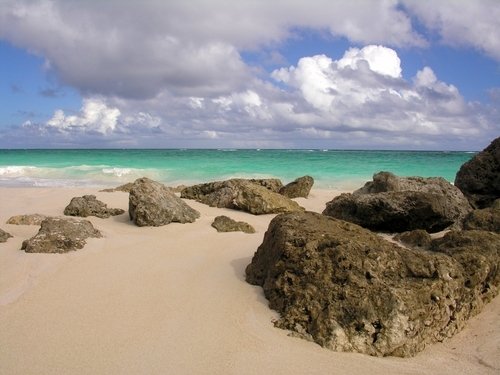
These are my favorite kind of rocks, just because they are at the beach. I love the beach! Some rocks at the beach are very smooth probably because they are constantly hitting the sand and the water. I can't wait to go to the beach this summer! where I will be sure to observe all the rocks so I can one day talk about them in my classroom!

Wednesday, February 16, 2011

Science in the News discussion

After the class discussion about the science in the news articles, I started realizing how important it is to keep up on the current events in the 'scientific' world. There are so many reasons why a class discussion is important and why it is so important to get kids to keep up on the science around them.

  • It is so important to use interaction in the classroom to get the students talking and sharing their ideas about what they learned about the scientific world
  • It is very important to have a reporter in the classroom, so the reporter can expand not only on their ideas, but everyone else's around them, to get their mind's going about something in a different perspective
  • It is important for students to realize how broad of a category science actually is..science isn't always about the scientific method. Science is in so many different forms, that we can see in many current events that we research about.
  • Looking up articles in the news uses so many different skills that include analyzing, classifying, observing, reflection on, and predicting. 
  • I think that looking up science in the news is so important to do in the classroom so students can keep up on current events, and they can expand their minds in other scientific ways that they normally don't use in the classroom.
I think that this activity was overall a positive experience and is important to do in the classroom for students to keep up with knowing about their current events in the world.

Monday, February 14, 2011

I'm finally learning how to make connections!

As I was reading chapter three, I was just simply reading all of the things that we reviewed in class. Most of what I was reading was just reinforcing what we have been having class discussions on the past few days. I got to the section about alternative conceptions and then I found it very interesting to read about how it means that the idea may not be "scientifically correct", but it still shows an understanding of the concept. This is important because it helps me to better understand how I can help the student evaluate all of his ideas as a future teacher.

The next thing I then read about was Scaffolding. What scaffolding refers to is teachers helping their students gain a better understanding of their learning,  the book says that learners need "scaffolding support by teachers to develop their science understanding." As I was reading this and understanding the chapter, I almost had an epiphany. In my Language Arts methods class we are learning a lot about scaffolding, we actually have a whole book about scaffolding that refers to what it is about and how to teach it. That's when I started making connections, that it's not only science that is all around us. Science is the thing that is around us physically, just the things like when we look outside and observe science, or do science in the classroom and follow the scientific method. But, I just am starting to learn how important it is how much more goes into teaching science in the classroom that is outside of the scientific method. Then, I started applying that to the fact that teaching science isn't the most important subject, but every other subject goes into teaching science and is as equally as important. Teaching about science doesn't just require knowing the scientific method, but so much more goes into actually making the students understand it. Students must understand and comprehend the lanugage used in the classroom to apply it to scientific ideas and procedures.
One of the first ways to do this is by teaching students about scaffolding. Scaffolding helps lead the students in  a positive direction to having a better understanding about problems and things they have to study.

This really does go to show how science is always around us. It's not just around us physically, but learning about these terms and phrases that are being taught in other classes as well are very important to understand so you can teach your students not just about general things, but the meaning behind them as well.

Now that I am starting to put all of this together I am feeling a lot better about all this material that I feel like is being thrown at me and I am excited to make more connections from the text to our class!!! (or in this case...all my classes!)

Saturday, February 12, 2011

Moon!

The first time I finally was able to see the moon was the 7th of February. The couple of days before that, the sky was too foggy to see the moon. But, I didn't observe much besides what I saw of the crescent moon the past couple of days. Here's what my observations looked like all the way through Friday: 2/11:


Thursday, February 10, 2011

Just another nature observation

For this week's nature observation, the one thing that I was glad to see was that there wasn't what seems like a million feet of show on the ground. It's finally melted and I can actually see the sidewalks now...what should I call that, a sign of relief? Anyways, walking to the library this morning I could not get over how windy it was. I really should invest in a ski mask for this campus... But anyways, even though I could barely stand walking in the cold I noticed such pretty things walking around campus. This really is in a beautiful area near the water. All around me were Icicles hanging off the branches swaying around just waiting to fall off. The wind blowing the trees back and forth just produced a constant howling noise. As cold as it is outside, it really is worth stopping for a minute to look at all the pretty trees around. Soon enough, the warm will come and there won't be any icicles hanging off of those branches. And that's what I'm looking forward to the most!!!!


Tonight....it's on to observe the moon. Right now all my moon drawings are in my notebook but once I get enough time i'll be sure to catch up and post all my drawings to my blog!

Thursday, February 3, 2011

a little bit of Nature here and there

As I was walking to class this morning, I never really took the time to notice the nature around me until I was told we had to for class. I noticed a lot of interesting things that I would never have noticed on my normal daily walks. Just looking around me and feeling the nice, crisp air around me really made it enjoyable to be around.

I noticed so many different things, the snow melting on the ground started leaving puddles and the sun shining directly into them made them give off such a bright glare. The dirty snow was kind of annoying to shuffle my feet through. When is this snow supposed to end, i'm sick of this cold feeling on my feet!

The amount of icicles that are hanging from the buildings is a little scary. It is scary to think that those things can fall off the building at any second, even if you're directly under them! Besides those things, nature is so fascinating to me. I mean, it is so interesting to think that nature is always changing and always around me. Nature is constantly changing and it is very fascinating to see how much it has an impact on your day to day life.

Day One of Class: A mixture of emotions

I was excited as I waked into class on the first day of school. It was almost like I was a little kid again walking into my fourth grade science class looking around for all of my friends. I was particularly excited knowing that we were going to be doing science so I was looking forward to this class.

The first seat that I sat at was at the emptiest table. I just recognized a couple of faces of people that I have seen in the previous education classes that I have taken.

Once class started, I was a little overwhelmed with all of the online use there was. I thought to myself, what happened to teachers using a paper and pen and printing out the syllabus to hand to us in class? After going through all of the online assignments in class, I felt a little better about it. I was a little more open minded about it and thought that using all of these online resources will only benefit me in the long run. I look at the internet now as an important tool to use for when i teach in my own classroom. It is important to get to know how to use the internet in a wide variety of ways to use for when I become a teacher.

At the end of the class period, I was still a little overwhelmed but I know that hopefully all my hard work that goes into science will only help me and will be a great learning experience for when I have my own classroom!